Pip: JJ’s Resilience and Reader Tribe writes from the threshold — that uncomfortable doorway between the life you know and the one you’re stepping into. Which, it turns out, is where most of the interesting material lives.
Mara: This episode pulls from posts about stories that carry us through dark stretches, the friendships that act as compass points, and the habits of mind that help us think more clearly and act less reactively.
Pip: Let’s start with the stories — and what they actually do to us.
Stories That Shape Us
Mara: The question here is what it means to keep moving when you’re standing at the threshold — that gap between the familiar and whatever comes next.
Pip: The Tolkien post puts it plainly. The setup is a JJ in mid-life, navigating a new role, a half-written book, new stages of parenting, and grandparenting all at once — and what keeps surfacing is this line: “Faithless is he that says farewell when the road darkens.”
Mara: What that means in practice is that the hesitation itself is not a sign you’re failing. The post names it directly — self-doubt, irrationality, the nervous system doing exactly what it does when asked to step into the unknown.
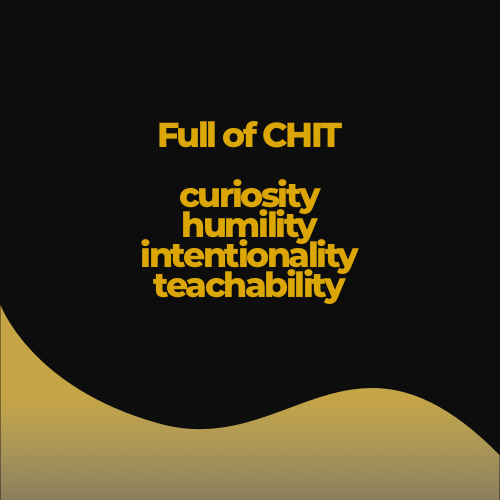
Pip: And the antidote offered isn’t more confidence. It’s curiosity, humility, intentionality, teachability CHIT — staying open when everything in you wants to shut down. That framing also runs through the memoir preview, “Chapter One: Mosquitos, Miseries, Mindsets,” which opens with a fifteen-year-old JJ lying under a tattered sheet in a hot Titusville rental house, narrating his own misery alongside a drunk neighbor’s wailing — and naming the inner voice that nearly won. Stop IT as JJ says. Stop being full of SH + (IT) and start being full of CHIT.
Mara: Both posts are asking the same question: which voices do you follow when the road gets dark enough that your own turns against you?
Pip: From threshold anxiety to the people who help you cross it.
Friendship And Shared Purpose
Mara: The post “Two Ships and One Goal” opens a different angle — not the internal voice, but the external ones. The ones that steady you because they’re genuinely headed somewhere too.
Pip: The post reaches for Nietzsche to describe what it calls star friendships — rare bonds that elevate and challenge. The quote lands like this: “We are two ships each of which has its goal and course; our paths may cross and we may celebrate a feast together, as we did — and then the good ships rested so quietly in one harbor and one sunshine that it may have looked as if they had reached their goal and as if they had one goal.”
Mara: What that captures is the nature of alignment without merger. Two people, distinct trajectories, temporarily sharing a harbor — and that shared moment being enough. The post frames these friendships as compass points, not anchors.
Pip: Which is a useful distinction, especially when you’re trying to figure out what’s negotiable.
Wonder, Rigor, And Bias
Mara: This segment asks how you actually slow down enough to think clearly — and what gets in the way when you don’t.
Pip: “Press Pause to Leap with Wonder and Rigor” is the frame. It opens with a pattern-recognition moment — the same idea surfacing everywhere, like noticing your new car’s model on every road. The recurring idea is pausing, and the post draws on Natalie Nixon’s work to explain why that’s harder than it sounds.
Mara: The verbatim line is this: “Wonder requires space to do nothing. This may be a radical proposition in our times of fast-paced, just-in-time expectations. The art of doing nothing requires suspending assumptions and the ability to wait. Waiting can be nerve-wracking — it is rigorous work to sit with the ambiguity of not knowing and sensing out options.”
Pip: So wonder isn’t passive. It costs something. The post’s practical move is the negotiables-versus-non-negotiables list — and the only item that makes the non-negotiable column is a morning walk without headphones. Small, but deliberate.
Mara: The companion post, “Chart and Use The Course with Bias Blasting C.U.D.O.s,” takes the thinking further. It draws on sociologist Robert Merton’s four norms of science — Communism, Universalism, Disinterestedness, and Organized Skepticism — and asks whether those same norms could govern how we make decisions in work and life.
Pip: The Star Wars scaffolding is doing some heavy lifting there, but the underlying argument is serious. Annie Duke gets quoted on disinterestedness: “We are not naturally disinterested. We don’t process information independent of the way we wish the world to be.” Which is exactly the bias that makes pausing so hard in the first place.
Mara: The two posts are essentially the same argument from different angles — one experiential, one structural. Pause long enough to notice your assumptions. Then scrutinize them.
Pip: The road gets clearer once you stop filling it with noise.
Mara: Threshold, compass, pause — the thread running through all of it is the same question: what do you do with the hesitation before the next thing?
Pip: Apparently, you get curious, humble, intentional, and teachable – you need to be full of chit as JJ says, and it probably doesn’t hurt to find a star friend, and leave the headphones at home. Same time next week.
Leave a Reply