Breaking | Building | Belonging: Why the Voices We Follow Matter
Note: If you prefer an audio book or longer sample, click here and select add to download a 30-minute sample of the book.
Chapter One
Mosquitos | Miseries | Mindsets
The oak fought the wind and was broken, the willow bent when it must and survived.
The Wheel of Time, Robert Jordan
Stunod (noun) /stü-näd/ A slang term of Italian American origin, used to describe someone perceived as foolish, stupid, or out of touch with reality. Often employed humorously or derogatorily.
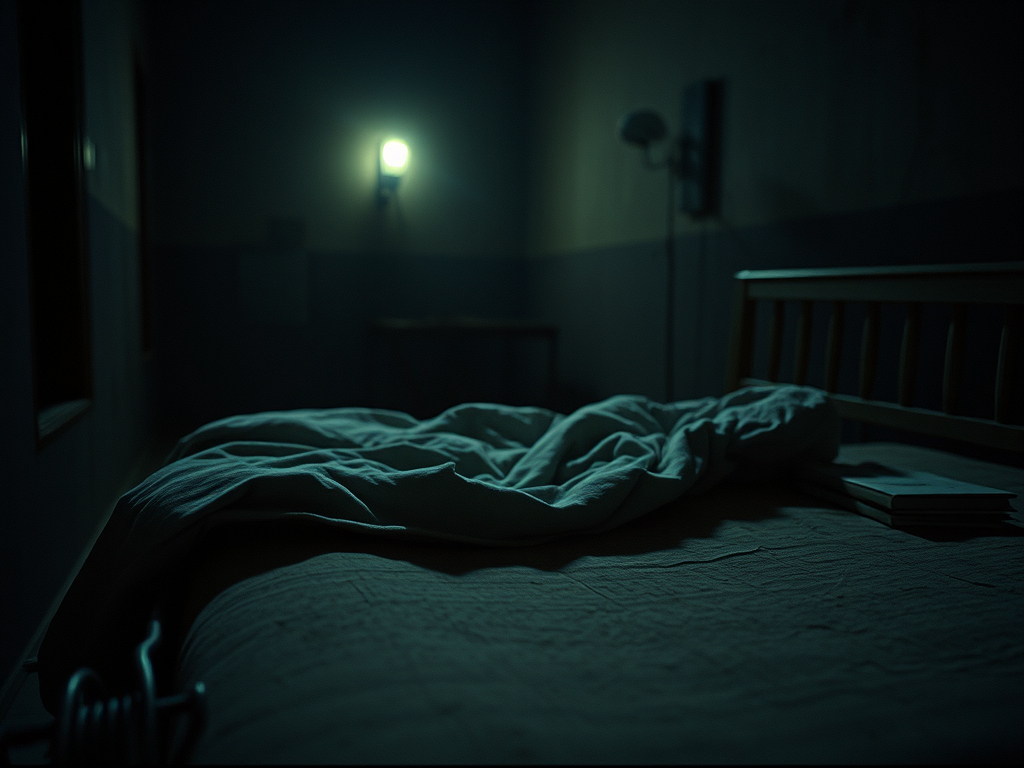
I lay under a tattered sheet that had tumbled too many times through the battered laundromat dryer. Dim streetlights crawled in as shadows across the dingy walls. It was the kind of room today’s filters would label “Eerie Eighties.”
The rusty mattress springs poked through the worn, stained fabric here and there. They weren’t strategic in probing—just a not-so-Shiatsu attempt to needle-massage my skin. As part of my nightly ritual to fall asleep, I listened to the unrelenting buzz of the mosquitoes around my head.
It was hot, which made the voracious, hummingbird-sized menaces belligerent. I could almost imagine them with post-Commodore Lionel Richie hairdos, buzzing: “Bzzzz, we’re gonna keep you up all night long…you’ll be tenting with this sheet all night long, all night…bzzzz.”
Even though I was exhausted, I had trouble dozing off again. I made a tent with my knees to keep some distance between their target—my sweaty, rail-thin frame—and the sheet. I carefully maintained the seal between bed and sheet lest one of my foes make it all the way in and get a taste of my flesh.
The nights in Titusville blurred together, sticky and unyielding, indifferent to whatever season the calendar claimed.
In the next room, my triplet sisters—sugar-crashed and sun-tired—slept soundly, their bellies still buzzing from the gas station owner’s generous Now and Later handout. They’d spent the day running wild with the neighborhood kids, never needing a bedtime beyond sheer exhaustion.
On the other side of the house, my mom’s room sat empty—a wood-paneled witness to another night at the Sunsetter Lounge, where free drinks, disco balls, and line dancing promised a different kind of escape.
Across the street, I could hear the lament of a man just as lost and frustrated as I was. I imagined him lying against the back door of the vegetable stand. His perch was a former gas station turned into a miniature farmers’ market where I often traded what little we had for a potato and zucchini so my mom could fry them up for the five of us.
“John, here’s a two dolla’ bill in food stamps; go get me a gagootz and a potato from across the street.”
The cashiers at both the vegetable stand and neighboring Save-A-Lot looked skeptical when I handed over food stamps. Sometimes they’d ask, ‘Where’s your mom?’ Their tone flickered between suspicion and pity, as if testing whether I’d scamper away or stand my ground. Face flushed, head down, scampering was my go-to move.
They’d usually accept it anyway; their responses varied, though they all seemed to share the same desire to work anywhere but there. One day, a smirk might suggest: “Why doesn’t somebody get a job so you can stop mooching off my taxes?” The next, a quiet nod might say: “I get it, life ain’t easy, but hang in there, kid—it’ll get better.”
Mom waited across the street, cast-iron pan hot and ready. Reusing the grease wasn’t just poverty—it was family tradition; flavor passed from one meal to the next.
As I felt the sting of some of my more enthusiastic enemies through the sheet, the drunken man’s mumble-singing drifted through the screen, an elegy for something lost.
“Ohhhhhhh…you….sar…..din’t….whaaa…ohhhh… whyyyy….arggghhhh…you…never….arrrrrr…ohhhhh”
A lament of mourning? Perhaps? For the pickled condition he was in. For a life he once had. I was unsure which, as this lush-borne lullaby was a regular occurrence as predictable as the train that rattled the floorboards of our ramshackle rental—a place held together by dust bunnies, spackle, and Section 8. I was also never sure if “the” voice I heard each night as the jalousie windows shook and let the winged furies in through their missing panes was the same or a different man. I didn’t know then, but my uncorrected, nearsighted vision may have been why the figure (or figures) across the street were never revealed, no matter how hard I squinted out the window. Whether one or many, the same theme persisted of remorseful muttering and wailing, night after somber night.
None of that mattered; the voice in my head, the one I nicknamed Sergeant Stunod, just cheered me on as I repeated the fifteen-year-old version of my vagabond neighbor’s song. We were like the worst boy band ever created, moaning, mixing our self-pity into a deafening dirge; the faceless man’s incomprehensible mutterings mingled with my cries to God to show Himself.
“Why is this happening to me? What did I do to deserve this?”
This duet was my soundtrack. What my grandmother would call a “Poor Pearl” mindset (always careful to overly dramatize the phrase and make “poor” sound more like “paw(r)” before drawing out the “purl” in her trademark Brooklyn/Italian drawl.)
Somewhere, Sergeant Stunod was rubbing his hands together, maniacally watching me slip into his shadow world. He could taste victory with each “poor purl” I added to the string I was tripping over. He wasn’t real—but his voice was louder than the man outside, louder than the trains.
Stunod’s taunts and my soundtrack didn’t stop at sadness. It danced next to something darker. Something final.
I didn’t just feel sorry for myself. I wanted it all to end…
Forever.
Looking to buy a memoir for your TBR pile (To Be Read) or to share with your loved one(s)?

Kindle edition: $2.99. Send it as a gift. On the Amazon page, choose “Buy for others,” enter their email and a short note, and they can read it on any Kindle or the free Kindle app.

You must be logged in to post a comment.