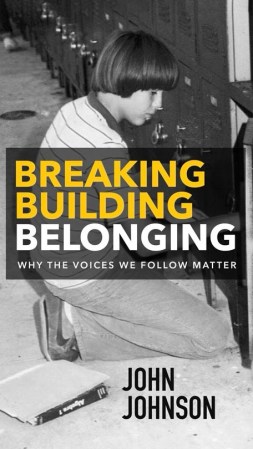
Today I launched the pre-order of my ebook. 8-26-25 will be the true live launch day and all formats will be available.

Hi everyone. In case you missed it, my book cover has been revealed on my social channels.
The ebook is now available for preorder on Amazon.
Those of you seeing this are likely the folks who first encouraged me to write by following this page and blog.
I want to thank you for that.
Here is some other breaking news:
I’m going to set up a shop out here, likely in September of 2025, where I will sell signed copies of the book, as well as some related and fun merchandise.
I’ve started a tribe and community on my socials and YouTube that will be called JJ’s Service Leader Resilience Lab. The idea behind it is that folks who continually pour from an empty cup need a community to help them build their resilience muscles.
If you’re interested in joining the pilot of the community in late 2025 for free, reach out.
DM me on one of my platforms. They are all available from my linktree.
https://linktr.ee/fourforsoaring
As you are readers, I want to share something with you from the book to encourage you to look a little deeper into it and consider reading it.
Fries | Footsteps | Farewells
Here is a preview of part of one of the chapters.
I have plenty of life-shaping memories from McDonald’s, but that moment is seared into my brain and soul, like an all-beef patty hissing onto the hot grill.
Another memory, just as seared in, stars a different kind of mom. Not a moment of confrontation like in the lobby—but a walk. A quiet, ordinary-looking walk around the Golden Arches that was anything but. It happened a couple of years later, when I wasn’t behind the grill anymore but was just starting to cut my teeth as a young leader.
Pat—my companion on that walk—wasn’t there when I started. The leadership team was all guys, and the energy reflected that. No “mom figure” in sight. It wasn’t until new owners came in and brought her over from across the state that the atmosphere began to shift. Before Pat, it felt like an endless summer: a bunch of young kids with their camp counselors, goofing off and figuring things out. It was where I found a best friend, had my first hopeless crushes, and learned how to make a mean Quarter Pounder.
About a year and a half in, while my former classmates were planning for prom and graduation, I was working my way out of high school and into management. I was a crew leader, counting down the days until I turned eighteen and could trade in my emerald green ’70s polyester uniform for the navy pants, dress shirt, Golden Arches tie, and jangling keys of a McDonald’s manager. (Funny enough, I dressed more formally for that job than I do now, at ten times the pay.) During that time, whenever I got frustrated with teammates who didn’t take the job as seriously as I did, Pat would gently talk me down.
“John, most of these folks aren’t trying to make a career of this; they just want to make some money to go to the movies or put gas in their car, so ease up a little, okay, bud?”
Eventually, I got the call-up from the “small fry leagues” and stepped into my role as shift manager. That’s when Pat’s coaching really kicked in. She helped me connect with the team, understand profit and loss, and—somehow—navigate the chaotic dating life that came with suddenly being one of the older guys on the crew. Of the six girls I dated before meeting my first wife, all but one were McDonald’s crewmates. So yes, Pat had her work cut out for her.
Pat was technically still an assistant manager, but that changed fast. The business was thriving under new ownership, and within months, it was time to retire the old walk-up McDonald’s, its faded bricks still bearing the ghost outlines of the original golden arches. Down the road, a shiny new brass-ceilinged palace waited. Another location was opening too, so for all intents and purposes, Pat and I “got our store.” She was the senior manager, and I was the assistant. It was a golden window of time, and I learned more than just how to run shifts—I learned how to lead while serving and loving the people I worked with.
Then came a chance to move away—exciting, risky, and loaded with the potential to burn bridges. I had met a girl named Karen. Like me, she had a rough past. Her mom and stepdad lived in Atlanta, and she wanted to rebuild with them, to start fresh in a big city. I felt the pull too: to escape my hometown, leave the fast-food world behind, and chase something new—maybe a bigger shot at restaurant management, maybe just distance from everything I knew.
Sergeant Stunod was thrilled.
“You think you’re ready for this? You’ll fall on your face. You don’t have a diploma, money, or a car. Who do you think you are?”
The opportunity meant leaving everything I knew—my hometown, the family I’d rarely been far from—to try to build a life somewhere new. At that point, I was genuinely at my peak. They were grooming me to run, maybe even own, my own store. I was training a future owner-operator, managing the schedule, and ordering products. I was the McDonald’s equivalent of a mover and shaker.
But the hardest part wasn’t the move—it was telling Pat, my champion, my adopted mom. The night I broke the news, she could tell something was heavy on my mind, so she suggested we go for a walk.
Stunod slithered in again.
“She’s going to laugh at you. She knows you’re making a mistake.”
Pat had this quirky, light, yet somehow intense hop-skip she would do as she moved from stillness to motion. Most days, it made me grin. That night, it felt more serious, more deliberate, like she already knew what I was about to say.
We walked the perimeter of the new store, just the two of us. Her hands were folded behind her back unless she paused to grab a stray piece of trash or nudge a rock off the sidewalk. Head down, walking with that signature shuffle, she didn’t say much—just let me talk.
It’s funny. These days, people say that making a deep connection requires eye contact. But Pat’s quiet, head-down posture—her full, focused attention—made me feel more seen and heard than any intense stare across a table ever had.
I gave her the whole speech I’d practiced. All my carefully stacked justifications. This was a bold, smart move. It was time for me to leave the nest. I made it sound like I had it all figured out.
She probably had to hold herself back from grabbing me by the shoulders and saying, “John, this is ridiculous.” She could’ve told me I wasn’t ready, that I was throwing away something good. That this was impulsive and risky.
But she didn’t.
She held the space. She let me speak. And when I was done, she stopped walking, turned to me, and looked up.
“I love you, John, unconditionally,” she said. “And that means I’ll support you no matter what.”
And just like that, Stunod disappeared.
And the Colonel showed up. Not with fanfare. Not with fireworks. Just presence. Steady. Quiet. Strong. The sense that I wasn’t alone.
Then Pat’s hand landed on my shoulder—real and grounding, like a tangible echo of that time in the McDonald’s lobby with my biological mom. In that moment, this woman who had no obligation to love me showed me exactly what a mother’s love looks like.
Sometime later, I did exactly what every headstrong, underprepared kid eventually does:
I came home.
No diploma. No car. No real prospects. No grand success story—just a few extra miles on the odometer and a heart full of hard lessons.
And when I returned to the Sunshine State—the place I’d once thought I’d outgrown—there was no scolding. No “I-told-you-so.” No raised eyebrow waiting to remind me of what I’d left behind.
There was Pat.
No lecture. Just a smile.
She welcomed me like the Prodigal Son.
No robe, no feast, no fanfare—just a subtle nod, a little extra pocket money while I got on my feet, and the unspoken grace of being received without condition.
That kind of love—the kind that sees you fail and still sets a place for you at the table—is rarer than most people realize. It’s the kind that doesn’t need to be shouted. It just… shows up. Again and again.
I still remember what it felt like to be forgiven, without ever asking.
Years later, I shared this whole story with Pat. She said she was humbled, proud of me, and glad I’d found my way.
We don’t talk every day now. Most of our updates live on Facebook. But the love? That’s still there—quiet and steady, like her listening walk around the store. We don’t need to say much.
We remember. We still hold each other in our hearts.
I jumped into the story to say I came back to Florida—and to Pat.
But I left something out.
I didn’t tell you how the tail between my legs got there. Or how that detour—disastrous in every logistical sense—planted the seed for something far deeper than a job or a girlfriend.
Because that season didn’t just test my pride. It cracked something open.
It’s funny how even when we think we’re in charge of the story, the detours end up doing the real work.
During that messy, wandering chapter, Karen—more than just the girl I’d followed to Atlanta—began to occupy a new kind of space in my story. She wasn’t just a co-conspirator in my big escape; she became a mirror, a witness, and eventually, the one who helped me find the key.
The key that would finally unlock the Colonel from his bunker.
He’d been there all along, of course. But something about love—messy, unexpected, imperfect love—can loosen even the most rusted locks.
But I’m getting ahead of myself.
That key moment is just around the corner.
And the Colonel? He was getting ready to walk back into the frame.
To read more – check out Breaking | Building | Belonging: Why the Voices We Follow Matter
Thanks for being such loyal readers and friends.
I want to see you soar!
Stay full of CHIT! (Search this channel if you don’t know what that means)
Leave a Reply